
Bulk Cargo
The Backbone of Florida’s No. 1 Port
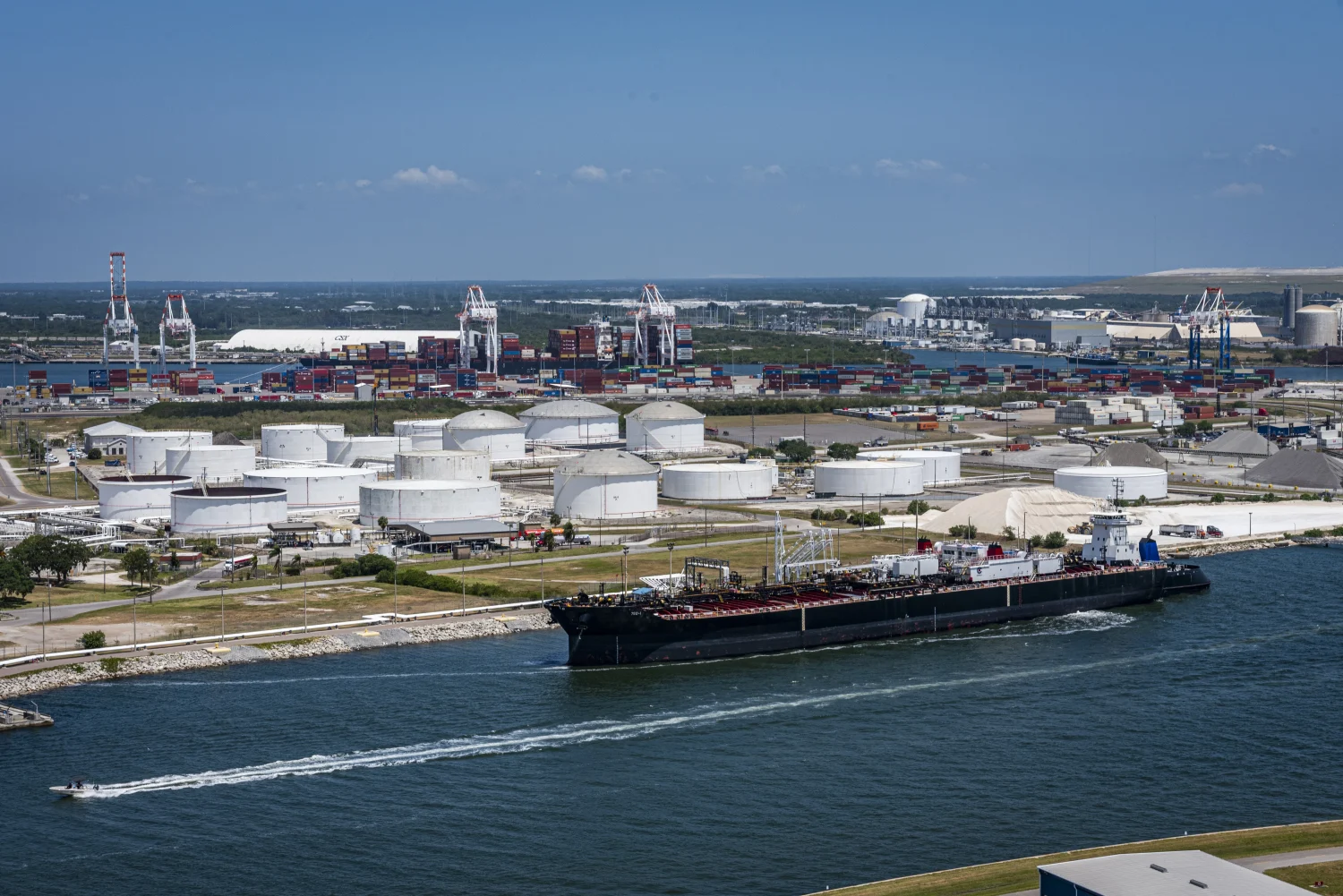

Bulk cargo was the foundation of Port Tampa Bay’s early success. It has been the top cargo port in the Sunshine State for as long as records have been kept. Each year, a ton of dry and liquid bulk transit the port … make that more than 30 million tons transit the port. Picture this. If all that tonnage could be packaged up in one pound bags, the port would move close to 20,000 of those every second. Day after day. Year after year.
Not all bulk cargo can be packaged up easily. In fact, the port’s largest cargo by volume is petroleum and related products.
Keeping Energy Flowing
Today, liquid petroleum and related products remain the largest commodity sector, with more than 17 million tons of oil, gas, and jet fuel moving through the port each year. Much of it is forwarded by pipeline, freeing up scarce space on regional highways.
About ten years ago, to get ahead of growth in this sector and integrate greater efficiencies and safety provisions, the port and its partners redeveloped and modernized the Richard E. Knight (REK) petroleum terminal complex. REK is critical to the energy industry, and a vital link that powers Central Florida’s consumers, businesses, and airports.
Construction Cargo Skyrockets
PTB has a five-year, billion-dollar capital improvement program that encompasses many bulk terminal projects. Some of the biggest investments on the planning board are slated for new and expanding aggregate and construction cargo facilities, including some at Port Redwing, East Port, Pendola Point, Port Sutton, and Hooker’s Point. There is an aggregates capacity shortage in Florida, and the way to fix that correctly is to build new capacity in the port location closest to the end users. Because West Central Florida is that place, PTB is the right port, ready to meet rising demand with direct, efficient access to Florida’s growth corridors.”
Strength in Diversity – Private Operations and Leaseholds
One of the port’s claims to fame is its collaborations. Many of the busiest bulk facilities are operated, or owned and operated, by private organizations. Their cargo volumes more than triple port tonnages. Private and public companies are scattered throughout the port district in a sort of checkerboard effect, each contributing to the critical mass that is the greatest port in Florida.
Frequently Asked Questions
How do I schedule a shipment?
- If you are scheduling a shipment for export or import via Port Tampa Bay, visit our Sailing Schedule page to contact one of our ocean carriers.
- If you need help with your logistics, there is a list of Customs Brokers and Freight Forwarders in our online Directory.
What will Port Tampa Bay charge me to ship my shipment?
No, individual shippers are not charged. Rates are charged to the port terminal operators and ocean carriers.
How do I track my shipment?
- Contact your Customs Broker, Freight Forwarder and/or Ocean Carrier to help track your shipment.
Can I ship goods to Europe or South America via Port Tampa Bay?
Visit our Sailing Schedule page to view all of our ocean carriers. Multiple connection points are available.
Does the Port sell shipping containers, how to buy containers?
- The Port does not own or sell shipping containers.
- For a listing of companies that do sell containers please, visit our online Directory under 'container & chassis sales, lease & repair'.
I bought an item from (insert country) and it says that the item is coming to Tampa?
"Tampa" does not mean that the "Port of Discharge" is the Port of Tampa/Port Tampa Bay.
Check your paperwork and review the Port of Discharge or the Final Destination.
Having a Freight Forwarder and/or Customs Broker can be very helpful.